My Publications
Bridging the Maturity Gap: A Comparative Analysis of Eco-Innovation Policy and Stakeholder Engagement in the UK and Nigeria via GHG Emission Scoping
Izuchukwu Precious Obani
16-05-2026
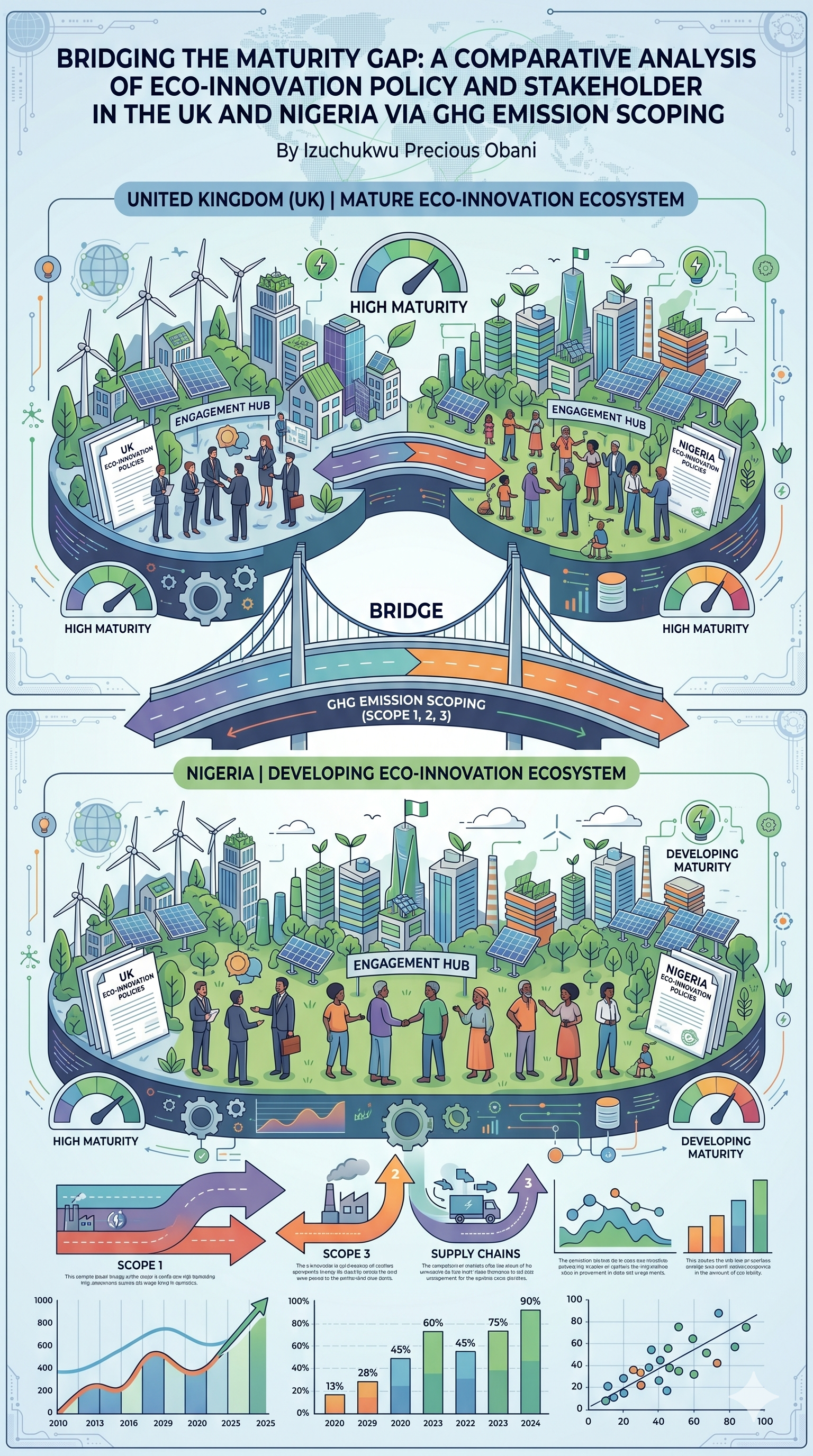
The urgent need for sustainable development has placed eco-innovation at the centre of global economic strategies and as the world grapples with the interconnected challenges of climate change and rapid resource depletion, eco-innovation has emerged as a critical mechanism for achieving
environmental sustainability and long-term economic resilience. Eco-innovation refers to the development of new or modified products, processes, services, organisational practices, or business models that reduce environmental harm while simultaneously generating economic and social value (Horbach et al., 2012; Konara et al., 2021). Furthermore, eco-innovation is increasingly recognised as an essential pathway for mitigating environmental degradation and supporting
sustainable transitions across industries (Xavier et al., 2017).
environmental sustainability and long-term economic resilience. Eco-innovation refers to the development of new or modified products, processes, services, organisational practices, or business models that reduce environmental harm while simultaneously generating economic and social value (Horbach et al., 2012; Konara et al., 2021). Furthermore, eco-innovation is increasingly recognised as an essential pathway for mitigating environmental degradation and supporting
sustainable transitions across industries (Xavier et al., 2017).