My Publications
State Bureaucracy vs. Extractive Institutional Voids: Regulatory Friction in Cross- National Eco-Innovation Support
Izuchukwu Precious Obani
09/06/2026
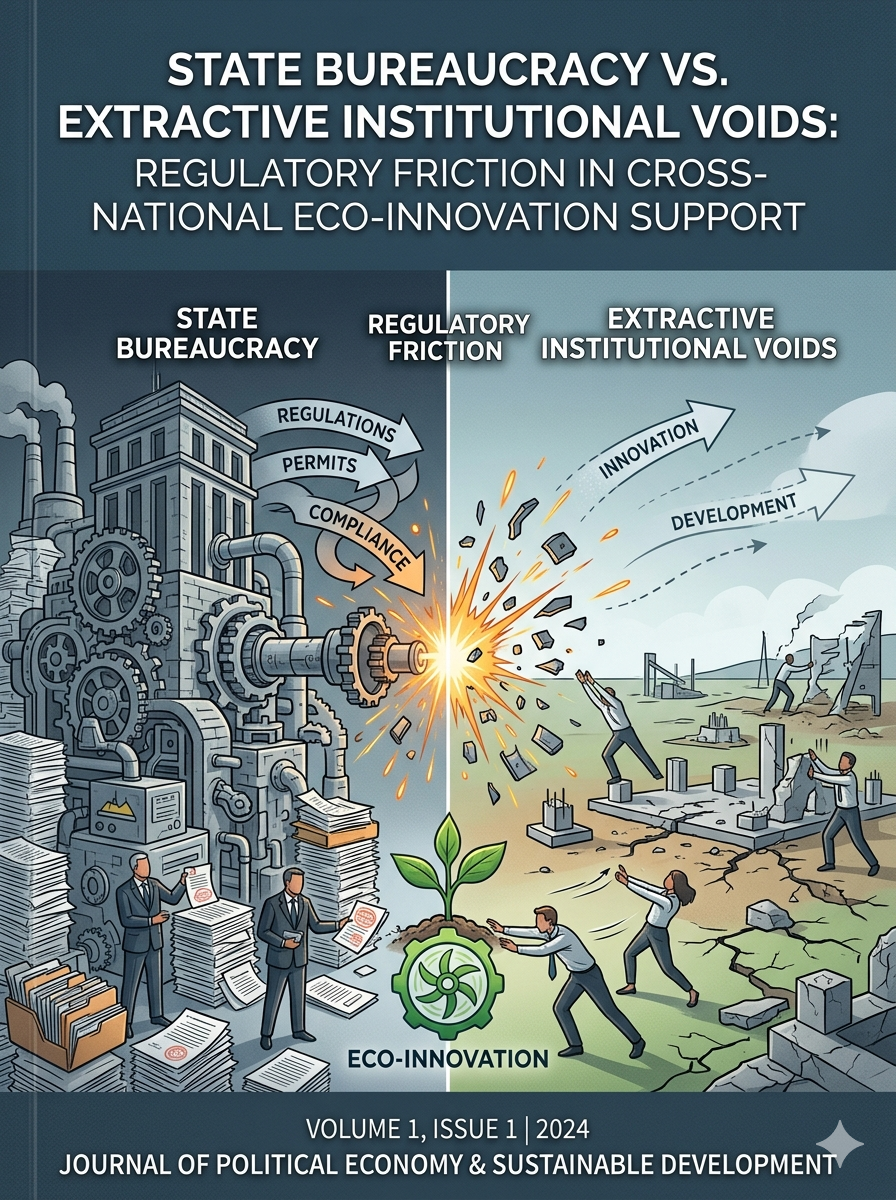
The transition toward low-carbon economies has intensified scholarly and policy attention on the role of small and medium-sized enterprises (SMEs) in driving eco-innovation, environmental adaptation, and sustainable industrial transformation. SMEs account for most global enterprises and are increasingly positioned as critical actors in achieving national and transnational climate objectives through cleaner production systems, circular resource practices, and carbon reduction initiatives (Dangelico, 2016; Oduro, 2024). Existing eco-innovation literature has largely approached sustainability transition as a managerial and technocratic challenge, emphasizing internal firm capabilities such as innovation capacity, environmental orientation, digital transformation, and resource efficiency (Cainelli, De Marchi and Grandinetti, 2015; Hasan and Rahman, 2023). While these perspectives remain important, they frequently under-theorize the political and institutional character of the state itself. Consequently, sustainability governance is often implicitly framed as a coherent developmental project in which governments operate as rational coordinators of environmental modernisation.