Event
The Lost Virtue: A Reflection on Loyalty, Process, and Reward
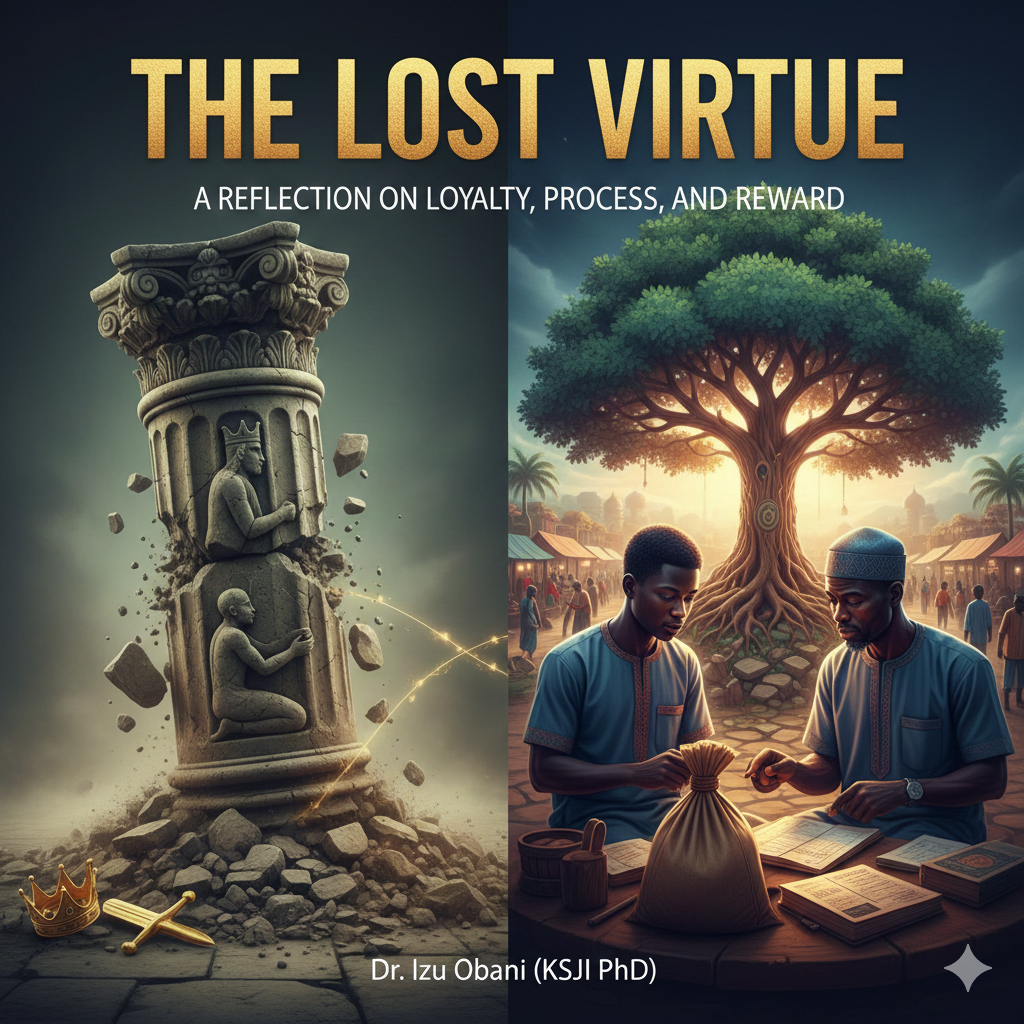
In an era of instant gratification and "smart" shortcuts, the ancient virtue of loyalty is rapidly becoming a relic. Yet, when we examine the most enduring structures; from biblical kingdoms to modern economic empires—we find that loyalty is not just a moral sentiment; it is the structural integrity that holds destiny together.
1. The Biblical Precedent: The Fall of King Saul
The story of Saul serves as a haunting cautionary tale. As you noted, Saul was lifted from obscurity-a man searching for his father's donkeys who was suddenly anointed to sit on a throne he did not build. The primary requirement for his tenure was not military brilliance or economic genius; it was alignment. God’s instruction regarding the Amalekites was a test of total surrender. Saul’s failure wasn't that he did nothing; it was that he did almost everything but reserved the right to edit the instruction. He thought he had become wiser than the One who called him. He spared the "best" of the sheep and cattle, rationalizing his disobedience as a form of wisdom or even sacrifice.
The lesson here is profound: Loyalty is absolute, not partial. When a subordinate begins to feel they have outgrown the instruction of the visionary, the decline begins. God removed the kingdom from Saul because you cannot trust a man with a throne if he cannot trust his Master with his obedience. The "wisdom" to overtake the master is often the foolishness that leads to destruction.
2. The Modern Erosion: The "Overtake" Syndrome
We live in a world that champions the "smart" over the "faithful." There is a pervasive urge to bypass protocol, to dismantle those ahead of us, and to seize crowns without bearing crosses.
This generation struggles with the concept of Process. We see the glory (the wealth, the position, the influence) but we despise the story that created it. We forget that the people we envy have paid in currencies we cannot see:
- Scars: The pain of endurance.
- Time: Years of waiting and serving in the shadows
- Relationships: The bridges built through trust over decades.
When we try to "jump the gun" or outsmart the system, we are essentially trying to withdraw from an account we haven't deposited into. We want the view from the mountaintop without the muscle memory developed during the climb. This lack of loyalty to the process produces leaders who are charismatic but hollow, rich but fleeting.
3. The Cultural Blueprint: The Igbo Apprenticeship System (IAS)
The Nwa Boy system is perhaps one of the greatest global examples of loyalty yielding dividends. It is a masterclass in delayed gratification. The system is built on a covenant of Followership. The apprentice enters the master's house not as a partner, but as a servant.
- The Input: You serve. You hold the bag. You open the shop. You observe the negotiations. You are not just learning a trade; you are absorbing the spirit of the business. You are paying your dues.
- The Output: The "Settlement." This is not just capital; it is a blessing. The money given to an apprentice who served faithfully carries a weight of goodwill that stolen money can never possess.
- The Impact: Because the apprentice humbled himself to learn, he avoids the mistakes of the novice. He doesn't just get cash; he gets a replicated model of success.
The tragedy of the disloyal apprentice (the one who steals from his master or leaves prematurely to start his own) is that he may have the capital, but he lacks the covering. He has jumped the process, and often, his business lacks the longevity to create generational wealth. The IAS proves that you cannot lead until you have successfully followed.
4. The Conclusion
Loyalty is a currency that buys you access to rooms your talent alone cannot enter. It is a virtue God cherishes because it reflects His own nature: He is the Covenant Keeper. If we are to rebuild our societies and our personal lives, we must return to the discipline of loyalty. We must respect the "years" of those ahead of us. We must understand that:
Submission is not stupidity; it is strategic positioning.
Service is not slavery; it is the tuition fee for greatness.
Just as the Nwa Boy eventually becomes the Oga, and just as David eventually replaced Saul by refusing to touch God’s anointed, our time of elevation is tied to our test of loyalty. You cannot effectively command what you have not respectfully obeyed.
Loyalty is the test. Leadership is the reward.